Basic Information
Symbol
CXCL1
RNA Class
mRNA
Alias
C-X-C motif chemokine ligand 1
SCYB1
GROa
MGSA-a
NAP-3
melanoma growth stimulating activity, alpha
GRO1 oncogene (melanoma growth stimulating activity, alpha)
fibroblast secretory protein
chemokine (C-X-C motif) ligand 1 (melanoma growth stimulating activity, alpha)
FSP
GRO1
MGSA
growth-regulated alpha protein
C-X-C motif chemokine 1
GRO-alpha(1-73)
GRO1 oncogene (melanoma growth-stimulating activity)
MGSA alpha
melanoma growth stimulatory activity alpha
neutrophil-activating protein 3
GRO
GROA
Growth-regulated alpha protein
Melanoma growth stimulatory activity
Neutrophil-activating protein 3
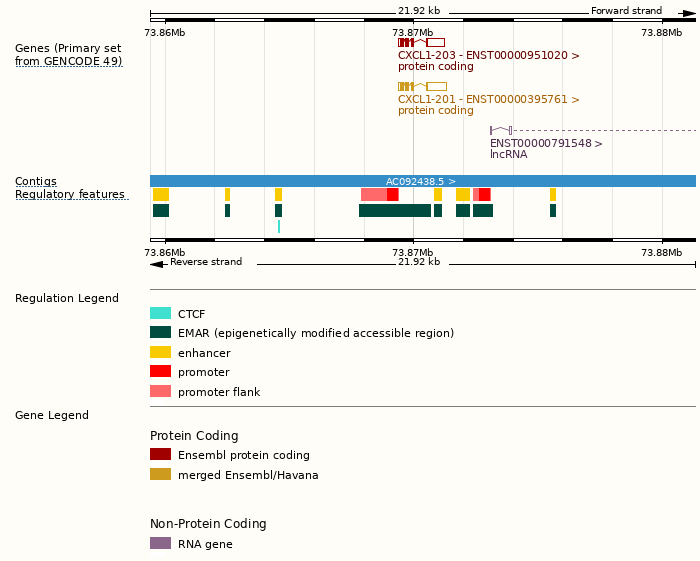
Location (GRCh38)
4:73869392-73871308
UCSC Genome Browser
Transcripts






Secondary Structure
MANE Select
NM_001511.4
Sequence length
1174 nt
GC Content
0.4540
Secondary Structure
Generated by RNAfold
Minimum free energy (MFE) structure:
Secondary structure that contributes a minimum of free energy.
Secondary structure that contributes a minimum of free energy.
Ensemble properties:
Thermodynamic properties of the Boltzmann ensemble.
Thermodynamic properties of the Boltzmann ensemble.
Minimum free energy
-336.4 kcal/mol
Thermodynamic ensemble
Free Energy:
-361.3 kcal/mol
Frequency:
0.0000
Diversity:
320.75
MFE Structure Visualization
Structure Prediction
MFE Structure Prediction
....((((((((((...))).))(((((.(((((((((....((((((..(((..(((((((.(.(((((((.((.((..((((.((((((((......((((..............))))....(((((((((...)))))))..))....))))).))).)))))).)).))))))).).)))..))))..)))......((((((((((..(((((...)))))(((.......)))....((((.....))))....(((..((((...))))..)))(.((((((......(((.........)))......)))))).).(((((.((((..((((.......................((((.....))))(((..((((..........))))..)))..)))).)))))))))))))))))))((((((((.(((.(((...)))))).))))))))..)))))))))))(((((((...(((.(..((....))..).)))....)))))))((((...))))(((((....)))))..............(((..((((((.....(((((((.(((((...(((((((...........(((((.((.....))))))))))).)))...))))).....(((((((.(((((((((((((((...((.((((....(((((((.......(((((((((.......)))))))))(((((.(((....(((....)))...))).))))).........(((((((.(((...))).)))))))))))))).......(((((..((((.((((((((((((((((((((((.((..(((((((((...((...(((((.((((((((........)))))))).)))))))...)))).)))))..))))))))))).)))..........(((((......)))))((((.(((...))).))))((((((((......))))))))(((((.........))))))))))))))))))))))))..)))))).))))........)))))).))))).)))))))................)))))))))))))....)))...))))))))).....)))))....((((((((...))))))))............
Thermodynamic Ensemble Prediction
....((((((((((...))).}},((((,{((((({((.{..(((((({.,{({{(({{({,.{,((({{{{.({,{{.,((((,(((((((({,,,,.(({(,...{(({......,|||{{,.{,|{|{{|{,..}}})||,,.)),...))}))}})).))})))})},))))))),)})}).})))),,})}....,,(((((((((({{(((((...)))))||{..,{{{{,,...,.,,,{.....},))},,.(((..((((...))))..))){.((((((......{({.........)))...,..)))))).}.(((((.((((..((((.......................((((.....))))(((..((((..........))))..))).,)))}.)))))))))))))))))))((((((((.(((.(((...)))))).))))))))}.,)))))..)})))|,,||}},}|,}|}}||....|{{{|{{|({{,,,||||,{,{{{...))))))}(({{{(((((.....,..............,,....)))))))))...,{{(((({{((,,..}}}}}},.}},,(((((.({.....)))))))}}})},.)})}...,,,,,,,{{(({{,.{(((((((({{((((...{{.((((....(((((((.......(((((((((,....,,}))))))))(((((.(((....(((....)))...))).))))).........(((((((.(({...})).)))))))))))))).......(((((..((((.((((((((({{(((((((((((.{{.,((((,((((...{.,,.,((({.((((((((........)))))))).})))}.},.,)))),)))))..||))))))))).)))},........(((((......))))),{|,.|||.,,))}.}}},{(((((((......)))))))|(((((.........))))))))))))))))))))))))..)))).},)))),,......}}}}|||||||}.}))))))}}||,|||.||||.,,,...........,,},}},}}}))))))))},.....)))))....{(((((({...})))))))............
Transcripts
| ID | Sequence | Length | GC Content |
|---|---|---|---|
| NM_001511.4 | ACAGAGCCCGGGCCGCAGGCACCUCCUCGCCAGCUCUUCCGCUCCUCUC… | 1174 nt | 0.4540 |
Summary
This antimicrobial gene encodes a member of the CXC subfamily of chemokines. The encoded protein is a secreted growth factor that signals through the G-protein coupled receptor, CXC receptor 2. This protein plays a role in inflammation and as a chemoattractant for neutrophils. Aberrant expression of this protein is associated with the growth and progression of certain tumors. A naturally occurring processed form of this protein has increased chemotactic activity. Alternate splicing results in coding and non-coding variants of this gene. A pseudogene of this gene is found on chromosome 4. [provided by RefSeq, Sep 2014]
Forensic Context
No forensic context available.
Genomic Tracks